Zodiac Modality Deep Dive: Team Friction Loops & Integration Moves
Teams don’t fail because people have bad intentions. Teams fail because people have “Modality Misreads.”
When stress hits a project, we stop being polite and start being primal. We revert to our factory settings. The Cardinal person starts commanding. The Fixed person starts digging in. The Mutable person starts scattering. Without a framework to understand this, we interpret these behaviors as character flaws. We label the Cardinal “tyrannical,” the Fixed “obstinate,” and the Mutable “unreliable.”
But these aren’t flaws; they are survival strategies.
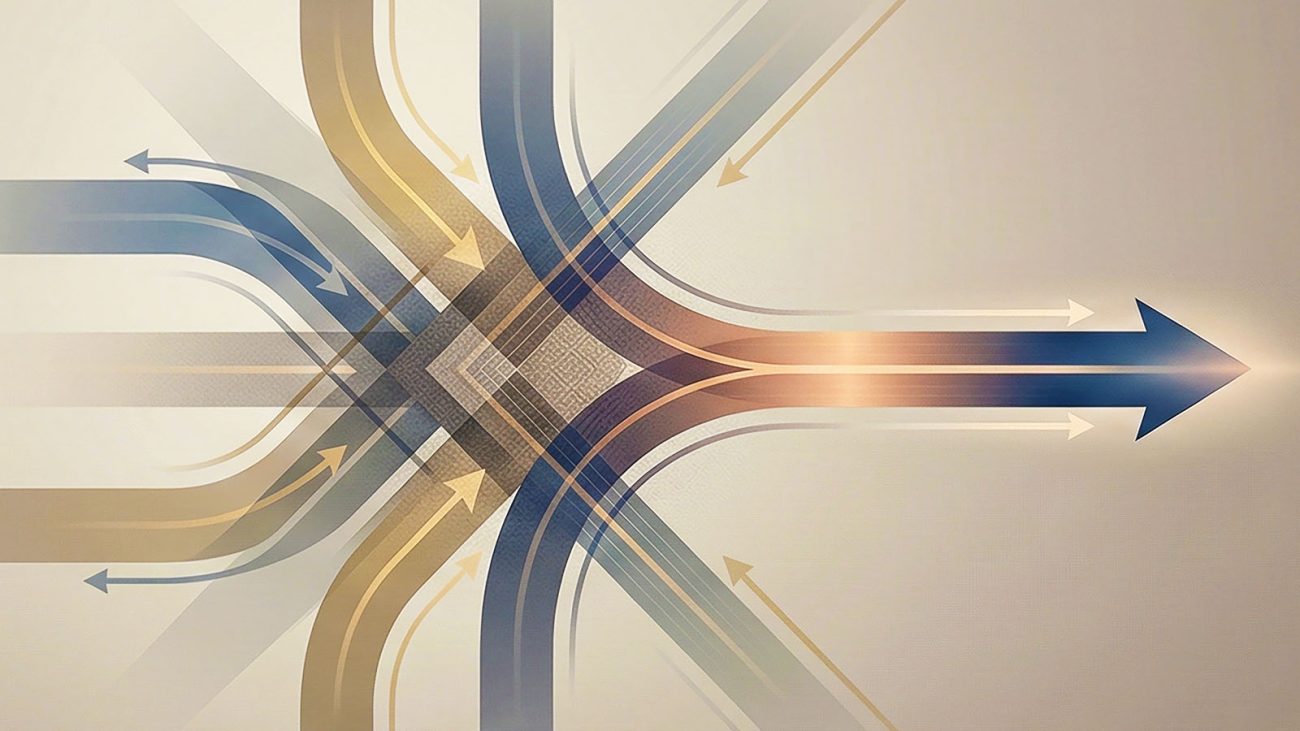
This article is a deep dive into the mechanics of Collaboration Physics. We aren’t just looking at who starts and who stops; we are looking at the Friction Loops that trap teams in dysfunction, and the specific Integration Moves that break those loops. This is not about ranking the modalities; it is about coordinating them.
The Deep Structure of Each Modality
To work effectively, we must understand not just what a modality does, but what it needs.
Cardinal Deep Structure: The Engine of Agency
Cardinal signs (Aries, Cancer, Libra, Capricorn) are driven by Agency. Their deepest fear is stagnation—the feeling that nothing is happening, or that they are powerless to affect the outcome.
- Core Drive: To initiate change and establish direction.
- Shadow Trigger: Feeling blocked, micromanaged, or stuck in “committee hell.”
- Stress Behavior: They over-function. They start making unilateral decisions, bypassing process, or becoming sharp/aggressive to force movement.
- Respect Cue: “I trust your lead on this.” / “What is your decision?”
- Growth Edge: Learning to wait for the team. Realizing that moving fast alone is sometimes slower than moving deliberately together.
Fixed Deep Structure: The Engine of Coherence
Fixed signs (Taurus, Leo, Scorpio, Aquarius) are driven by Coherence. Their deepest fear is instability—the feeling that the ground is shifting and nothing can be built or trusted.
- Core Drive: To sustain, refine, and protect the core value.
- Shadow Trigger: Constant pivoting, changing goalposts, or lack of follow-through.
- Stress Behavior: They stonewall. They refuse to adopt new tools. They hoard information or resources to ensure something remains stable.
- Respect Cue: “We are sticking to the plan.” / “I value your consistency.”
- Growth Edge: Learning to pivot without panicking. Realizing that adaptation is sometimes the only way to preserve the core mission.
Mutable Deep Structure: The Engine of Relevance
Mutable signs (Gemini, Virgo, Sagittarius, Pisces) are driven by Relevance. Their deepest fear is entrapment—the feeling of being locked into a bad path, a wrong answer, or a dead end.
- Core Drive: To adapt, improve, and connect the dots.
- Shadow Trigger: Rigid rules, lack of options, or being forced to commit before they have the data.
- Stress Behavior: They disperse. They say “yes” to everything but deliver on nothing. They over-complicate simple tasks by adding too many variables.
- Respect Cue: “What’s your perspective?” / “We have room to experiment here.”
- Growth Edge: Learning to commit to an imperfect plan. Realizing that endless optionality prevents actual progress.
“Friction Loops” (The Patterns That Trap Teams)
When two stress behaviors interact, they create a loop. Identifying the loop is the first step to breaking it.
Loop 1: The Steamroller Loop (Cardinal vs. Fixed)
- The Pattern: Cardinal feels stuck and pushes harder (escalates). Fixed feels pressured and digs in deeper (resists).
- The Misread: Cardinal thinks Fixed is lazy or obstructive. Fixed thinks Cardinal is reckless and disrespectful.
- The Loop: Push → Resist → Push Harder → Resist Harder.
- The Integration Move: The Decoupling. Stop the meeting. Acknowledge the speed mismatch.
- Move: Cardinal agrees to pause for 24 hours. Fixed agrees to provide a specific list of concerns by that time.
- The Win: Cardinal gets a timeline (motion); Fixed gets time to process (stability).
Loop 2: The Chaos Loop (Mutable vs. Fixed)
- The Pattern: Mutable suggests a change to improve the project. Fixed perceives it as a threat to the foundation and shuts it down. Mutable feels unheard and starts “shadow working” (doing it their way anyway). Fixed feels betrayed and micromanages.
- The Misread: Fixed thinks Mutable is flaky/undisciplined. Mutable thinks Fixed is a dinosaur/control freak.
- The Loop: Adapt → Tighten Control → Evade Control → Distrust.
- The Integration Move: The Sandbox. Define a safe area for change.
- Move: “We will keep the Core Process (Fixed) exactly as is. You can experiment with the Creative Layer (Mutable) however you want.”
- The Win: Fixed feels safe; Mutable feels free.
Loop 3: The Spin Loop (Cardinal vs. Mutable)
- The Pattern: Cardinal sets a goal. Mutable says, “But what about X?” Cardinal changes goal to include X. Mutable says, “But what about Y?” Cardinal gets frustrated and demands a final answer. Mutable feels pressured and gives a vague answer.
- The Misread: Cardinal thinks Mutable is uncommitted. Mutable thinks Cardinal is rushing into a mistake.
- The Loop: Decide → Reopen → Frustration → Vague Agreement.
- The Integration Move: The Definition of Done.
- Move: “We are in the Deciding Phase until noon. After noon, we are in the Execution Phase. No new inputs allowed.”
- The Win: Cardinal gets a deadline; Mutable gets a dedicated window for input.
Integration Moves (Practical, Non-HR)
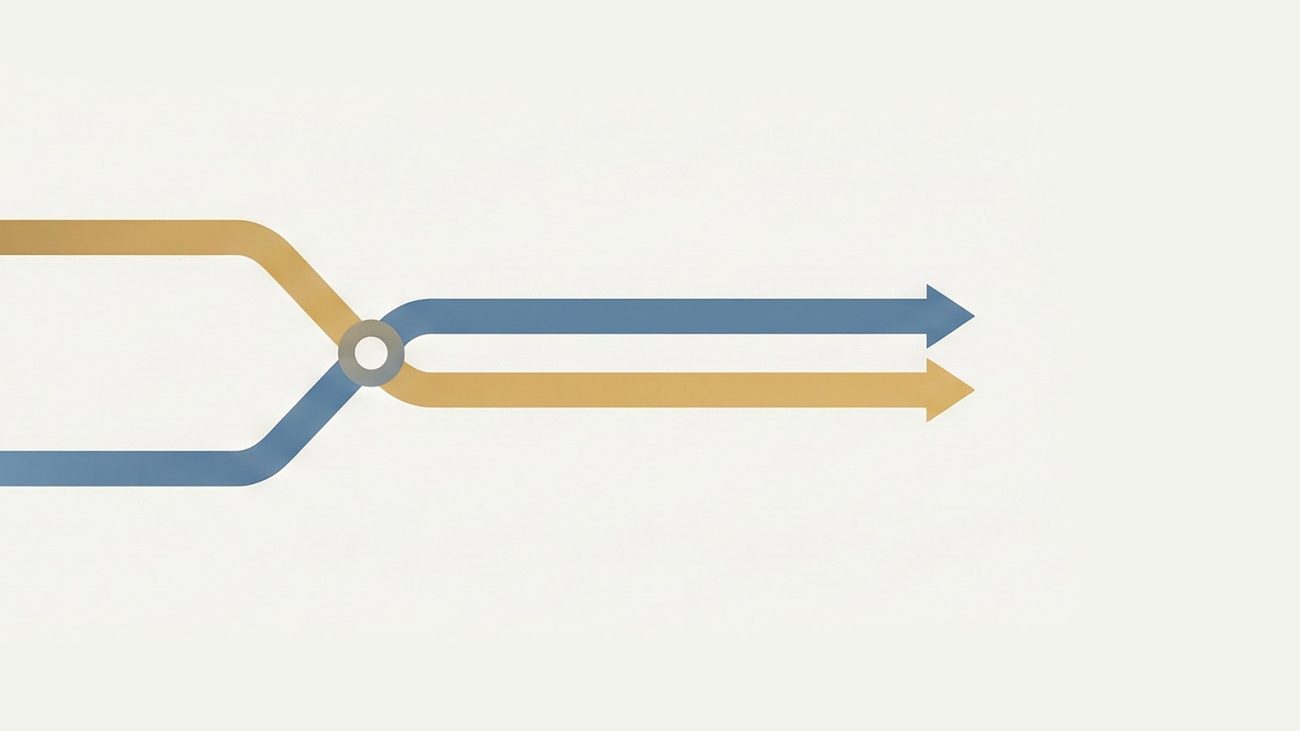
We don’t need team-building retreats; we need better protocols. Here are four “moves” that solve 80% of modality friction.
- Pacing Agreements (The Meeting Type)
Most meetings fail because we don’t know what kind of meeting it is.
- Cardinal Meeting: The “Decision” meeting. Short, agenda-driven, outcome is a Yes/No.
- Fixed Meeting: The “Process” meeting. Deep dive, reviewing standards, checking quality.
- Mutable Meeting: The “Brainstorm” meeting. No bad ideas, open-ended, outcome is a list of options.
- The Move: Label every meeting invitation. “This is a Decision meeting.” This tells the Mutable people to focus and the Fixed people to prepare.
- Handoff Rules (Who Owns What)
Stop making everyone do everything.
- The Move: Give the Start to the Cardinal (Vision/Launch). Give the Middle to the Fixed (Execution/Quality Control). Give the End/Pivot to the Mutable (Review/Client feedback/Final polish).
- Why: It honors the natural energy curve.
- Decision Clarity (Reversible vs. Irreversible)
- The Move: Classify decisions.
- Type 1 (Irreversible): High stakes. Give this to the Fixed sign to vet. They will find the risks.
- Type 2 (Reversible): Low stakes. Give this to the Cardinal sign to execute immediately. Speed matters more than perfection.
- Type 3 (Complex/Nuanced): Give this to the Mutable sign to explore options before deciding.
- Respect Signaling
Each modality needs to hear a different frequency to feel respected.
- To Cardinal: Signal Speed/Action. “I’m on it.” “Done.”
- To Fixed: Signal Reliability/Quality. “I checked the details.” “It will be ready as promised.”
- To Mutable: Signal Openness/Nuance. “That’s an interesting angle.” “I see your point.”
Case Studies + Reading Paths
Let’s apply this to real-world scenarios.
Case A: The Remote Project with Shifting Priorities
- The Situation: A client keeps changing the scope.
- The Team: A Capricorn Manager (Cardinal), a Taurus Lead Dev (Fixed), and a Gemini Designer (Mutable).
- The Friction: The Capricorn wants to bill for every change (Control). The Taurus hates the rework and is grumpy (Resistance). The Gemini is excited by the new changes but is confusing the team with too many Slack messages (Scatter).
- The Reading Path:
- Identify Modalities: Capricorn = Cardinal (Needs direction). Taurus = Fixed (Needs stability). Gemini = Mutable (Needs flow).
- Identify the Loop: The “Chaos Loop.” Gemini feeds chaos; Capricorn tries to control it; Taurus shuts down.
- The Move: The Buffer. Capricorn negotiates a “Scope Freeze” with the client (Cardinal protection). Gemini is assigned to mock up the new ideas in a separate folder (Mutable play). Taurus is told to ignore the new ideas until the Scope Freeze is signed (Fixed protection).
Case B: Creative Team vs. Ops Team
- The Situation: The Creative team wants to delay the launch to make it “better.” Ops wants to launch on time.
- The Team: Creative Director (Pisces – Mutable). Ops Lead (Virgo – Mutable/Earth mix) and CEO (Aries – Cardinal).
- The Friction: Aries says “Launch now.” Pisces says “It’s not right yet.” Virgo says “The process is messy.”
- The Reading Path:
- Identify Modalities: Aries = Cardinal. Pisces/Virgo = Mutable.
- Identify the Loop: The “Spin Loop.” The Mutables are iterating endlessly. The Cardinal is escalating pressure.
- The Move: The Iteration Promise. Aries agrees to a soft launch (Beta). Pisces/Virgo are given a specific timeline for “Version 2.0.”
-
- Why: It satisfies Cardinal speed (“We launched”) and Mutable perfectionism (“We can still fix it”).
Script Library (Expanded)
Keep these in your back pocket.
For Meetings
- Cardinal: “We need a decision in the next 10 minutes. What is the blocker?”
- Fixed: “Let’s pause the brainstorming and confirm what we are actually building.”
- Mutable: “I think we’re missing a perspective here—can we look at option B again?”
For Deadlines
- Cardinal: “I need this by EOD. Is that possible?” (Directness)
- Fixed: “I can hit that deadline if we cut feature X. Otherwise, I need until Tuesday.” (Boundaries)
- Mutable: “I can get you a draft today, but the final will need another pass.” (Flexibility)
For Repair (When Things Go Sideways)
- Cardinal Apology: “I pushed too hard because I was stressed about the timeline. I didn’t mean to steamroll you.”
- Fixed Apology: “I got stubborn because I was worried about quality. I should have listened to your new idea.”
- Mutable Apology: “I wasn’t clear about my progress and that caused confusion. I will be more direct next time.”
Closing: The Symphony of Work
Teams don’t fail because they have different styles; they fail because they try to force everyone to play the same instrument.
The Cardinal instinct protects the Future (where we are going).
The Fixed instinct protects the Present (what we have built).
The Mutable instinct protects the Bridge (how we get there).
When you stop judging your Fixed colleague for being “slow” and start valuing them as the Anchor, the tension drops. When you stop judging your Cardinal boss for being “intense” and start valuing them as the Engine, the resentment fades.
This is the deep work of professional astrology: not to predict the future, but to harmonize the present. It is the realization that we are not just coworkers; we are a constellation of conflicting, complementary energies trying to build something together.
Your modality is not your destiny; it is your instrument. Play it well.
Narrative Legal & Compliance Notice
Astrweald content is designed to inspire curiosity and foster self-awareness. We use astrology as a symbolic language to explore patterns of personality—not as a promise, diagnosis, or directive—and it does not replace medical, psychological, legal, or financial advice. If you’re feeling overwhelmed or unsafe, please consider reaching out to qualified support in your region. If it resonates, let it be a mirror, not a verdict. For entertainment purposes only.
Premium sharing
This article is an original piece by Astrweald. This article is for members. You may share the public preview link to this article. You may also share 1–2 short quotes from the preview with a link back to the preview page. Please do not copy, repost, or publish the full premium article (or large portions of it) anywhere else.